

Psychedelics Galaxy
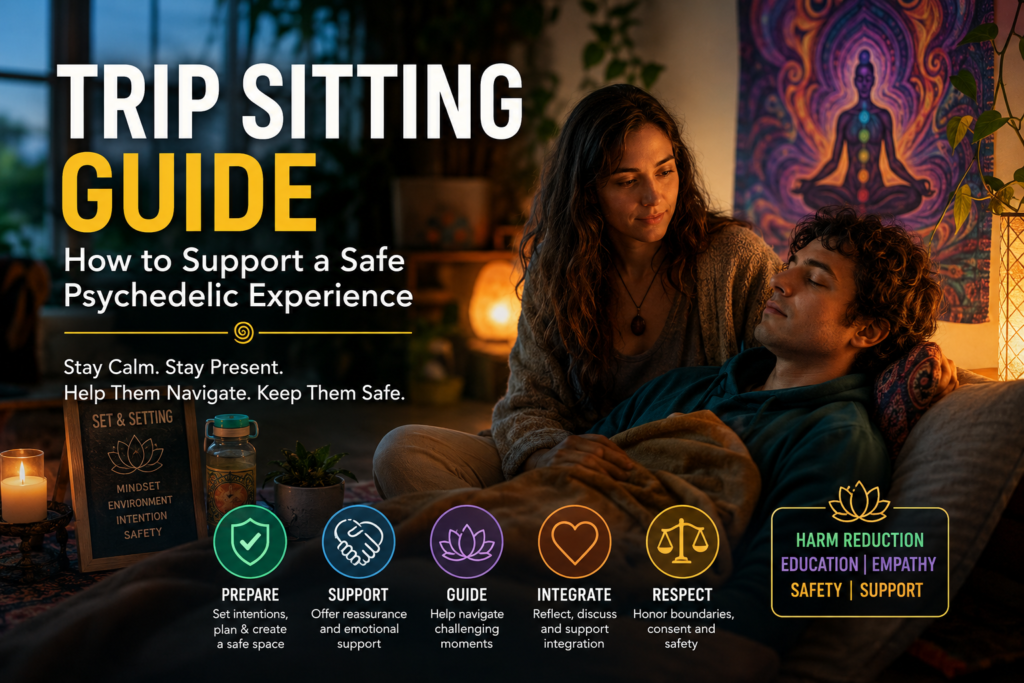
Trip Sitting Guide: How to Support Safe Psychedelic Experience
May
Psychedelic experiences can be deeply meaningful emotionally, spiritually, and psychologically. But because psychedelics are powerful and often unpredictable, trip sitting plays an essential role in harm reduction and safety. How to Support Safe Psychedelic Experience!
A trip sitter is a sober, supportive person who stays present throughout the experience—helping the tripper feel grounded, reducing risk, and responding calmly if challenges arise. This guide is designed to help you understand what trip sitting is, what to do before, during, and after a trip, and how to handle legal and ethical responsibilities.
Important note (harm reduction): Psychedelics can increase risk for people with certain medical or mental health conditions. This guide is educational not medical advice. If you’re unsure whether psychedelics are safe for someone, consider speaking with a licensed professional.

What Are Psychedelics and Why Do They Need Safety Support?
Psychedelics—such as psilocybin mushrooms, LSD, and DMT change perception, mood, and thinking. Many users describe experiences that range from enhanced awareness to profound emotional releases or “life review” insights.
Even when a trip is intended to be positive, psychedelics can also trigger:
- intense anxiety or panic
- distressing thoughts or trauma surfacing
- confusion, poor decision-making, or risky behavior
- worsening symptoms in vulnerable individuals
That’s why having a sober support person matters.
What Is Trip Sitting?
Trip sitting is the practice of having a responsible, sober caretaker accompany someone during a psychedelic journey.
A good trip sitter:
- provides emotional reassurance
- maintains a calm environment
- helps reduce hazards (physical risks, boundaries, wandering, etc.)
- supports the person to get through difficult moments safely
- encourages respectful, non-coercive care
Trip sitting is NOT | How to Support Safe Psychedelic Experience
- controlling the tripper’s thoughts
- “forcing” a certain outcome
- judging the experience
- abandoning someone during peak distress
Core Role & Responsibilities of a Trip Sitter
A trip sitter should be dependable, steady, and present. Key responsibilities include:
1) Create Safety Through Environment (Set & Setting)
“Set and setting” strongly influences how people experience psychedelics:
- Set: mindset, emotional state, expectations, and intentions
- Setting: physical space, privacy, comfort, sound/light, and emotional safety
Trip sitters help ensure the environment feels calm and secure.
2) Offer Emotional Support and Reassurance
A sitter doesn’t need to “fix” the trip. Often, what helps most is:
- validating feelings (“You’re safe. This is temporary.”)
- gentle grounding (“Stay here with me.”)
- staying calm if the tripper becomes overwhelmed
3) Stay Calm Under Pressure
Difficult trips can happen even with careful planning. A good sitter remains steady—reducing escalation and preventing risky actions.
4) Support Communication Without Judgment
Trip sitters should listen and encourage honest sharing. Use calm, clear communication and avoid arguing with the tripper’s perceptions.
5) Know the Substance Basics (Without Overstepping)
Understand general effects and typical timelines so you can anticipate needs—like when the onset and comedown are likely occurring.
For safety, avoid “mixing advice” or experimenting with unknown combinations.
How to Prepare for a Psychedelic Trip (Trip Sitter Checklist)
Preparation is where many safety gains happen. Consider these steps:
Step 1: Confirm Suitability (Medical + Mental Health Awareness)
Avoid trip sitting for someone who may be at high risk without professional guidance, especially with:
- current psychosis or severe bipolar symptoms
- unstable mental health conditions
- medical conditions where psychedelic effects could worsen safety
Step 2: Pre-Trip Conversation (Expectations, Fears, Intentions)
Before the session, discuss:
- what the tripper hopes to experience
- what they’re worried about
- what would make them feel safe
- what boundaries you must respect
Step 3: Arrange the Environment
Set up a comfortable space:
- quiet room, minimal interruptions
- soothing lighting and comfortable seating/bedding
- water accessible
- basics ready (blankets, tissues, headphones, eye mask if helpful)
Step 4: Plan for the Timeline
Know the trip phases (onset → peak → comedown) and be available the entire time. The trip sitter should not “check out” midway.
Step 5: Decide on Communication & Grounding Signals
Agree on:
- what to do if someone becomes anxious
- how to handle bathroom needs safely
- whether eye contact, music changes, or grounding exercises help
What to Do During the Trip (By Phase)
Onset: Reassure and Ground
The onset can feel surprising—sometimes uncomfortable. The sitter should:
- stay calm and close-by
- remind the tripper they are safe
- avoid overwhelming them with too many prompts
Peak: Be Present and Supportive
During the peak:
- keep noise and stimulation low unless the tripper requests otherwise
- avoid intense debate or “reality corrections”
- offer reassurance and remain emotionally regulated
Comedown: Comfort and Stabilize
As effects fade:
- encourage rest and hydration
- provide reassurance that difficult emotions are temporary
- help the person avoid sudden movement or overstimulation
How to Handle a Bad Trip or Difficult Experience
A “bad trip” is often a sign of fear, overwhelm, or destabilization—not failure.
Try these harm-reduction strategies:
- Validate: “I can see you’re scared. You’re safe.”
- Ground: focus on breathing, warmth/blankets, quiet touch only if welcomed
- Reduce input: dim lights, lower sounds, minimize conversation
- Reassure about time: “This will pass. You’re not alone.”
- Check safety needs: bathroom, water, removing hazards
When to get professional help
If there is:
- suicidal talk, severe aggression, or inability to stay safe
- signs of medical emergency (fainting, severe chest pain, etc.)
- prolonged severe psychological distress beyond what seems typical
Seek emergency or professional support immediately. How to Support Safe Psychedelic Experience!
Post-Trip Support and Integration (Don’t Skip This)
Many people think the journey ends when the effects stop. In reality, integration is where insights become useful—and where unresolved distress can be processed.
Why integration matters
Integration helps the tripper:
- understand what happened
- make meaning without forcing conclusions
- translate insights into healthy changes
- reduce the “aftershock” that can follow intense experiences
Practical integration ideas
- journaling (timed prompts can help)
- gentle reflection or meditation
- discussing themes with a trusted person
- therapy or coaching if insights bring up trauma or ongoing distress
Signs professional help may be needed
- persistent anxiety/panic
- ongoing paranoia or mood instability
- intrusive trauma symptoms
- inability to function normally in daily life
Ethical Considerations for Trip Sitting
Trip sitting should be rooted in respect and consent.
Ethics include:
- autonomy: don’t control the experience
- non-judgment: don’t shame or invalidate
- confidentiality: treat what’s shared as private
- boundaries: never sexualize or exploit the situation
- honesty: be clear about your role and limitations
Legal Notes (Why You Should Stay Informed)
Psychedelics remain illegal in many places. Legal status varies by country and sometimes by state/province.
Action step: before any involvement, ensure you understand laws where you live and operate responsibly. How to Support Safe Psychedelic Experience!
If you’re exploring psilocybin options: Buy DMT Vapes, Buy Dried Magic Mushroom, Buy LSD
Want a safer, more informed experience?
Pair responsible preparation with supportive care. If you’re exploring psilocybin mushrooms, choose thoughtfully and plan intentionally. Buy Golden Teacher Mushrooms, Buy Penis Envy Mushrooms, Buy Blue Meanies Mushrooms, Buy Enigma Mushrooms
FAQ (SEO FAQ Section)
1) What does a trip sitter do?
A trip sitter stays sober and present to support the tripper’s safety, comfort, and emotional stability before, during, and after the psychedelic experience.
2) Is a trip sitter necessary?
While not always legally required, having a sober trip sitter can significantly improve safety and harm reduction—especially for first-time or anxious participants.
3) How do I know if someone is a good trip sitter?
A good trip sitter is calm, empathetic, reliable, communicates non-judgmentally, understands basic safety/timing, and knows when to seek help.
4) Can a trip sitter help “make the trip better”?
They can support the environment and emotional stability. However, a sitter should avoid forcing outcomes. The goal is safety and grounding, not controlling the experience. How to Support Safe Psychedelic Experience!
5) What should I do if the person is having a difficult trip?
Stay calm, validate their feelings, reduce stimulation, use grounding techniques, and reassure them that it will pass. Seek professional/emergency support if there are safety red flags. How to Support Safe Psychedelic Experience!
6) What is integration after a trip?
Integration is the process of reflecting on and applying insights after the experience—often through journaling, discussion, therapy, or structured reflection. How to Support Safe Psychedelic Experience!
