
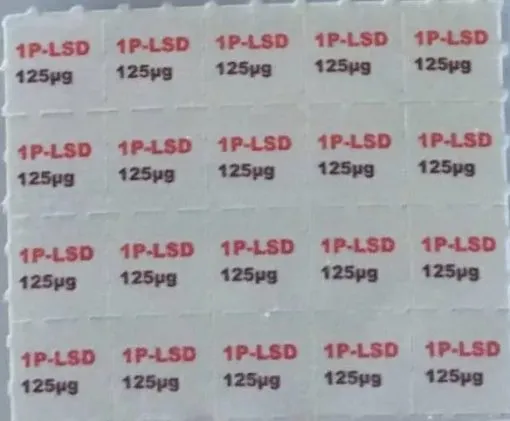
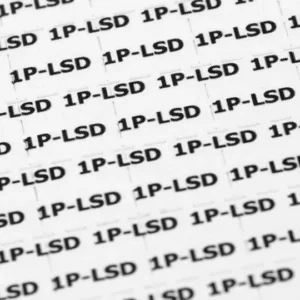
Buy 1P-LSD Blotter (1-Propionyl-LSD)
Buy 1P-LSD Blotter (1-propionyl-lysergic acid diethylamide) is a synthetic lysergamide compound structurally related to Lysergic Acid Diethylamide (LSD-25). It belongs to the ergoline family of compounds known for interacting with serotonin receptors, particularly the 5-HT2A receptor associated with altered perception and cognition.
Researchers analyze lysergamides like 1P-LSD to better understand how psychedelic compounds affect brain signaling, consciousness, and perception.
Scientific research on psychedelics is actively conducted at institutions such as the Johns Hopkins Center for Psychedelic and Consciousness Research and the Imperial College London Centre for Psychedelic Research.
Chemical Structure and Properties
1P-LSD shares a nearly identical molecular backbone with LSD but includes a propionyl group attached to the indole nitrogen. This small structural change makes it a distinct compound while maintaining strong similarity to LSD in laboratory studies.
Chemical Information
-
Chemical Name: N,N-diethyl-7-methyl-4-propanoyl-6,6a,8,9-tetrahydroindolo[4,3-fg]quinoline-9-carboxamide
-
Synonyms: 1P-LSD, 1-propionyl-lysergic acid diethylamide
-
Molecular Formula: C23H29N3O2
-
Molar Mass: 379.5 g/mol
-
CAS Number: 2349358-81-0
Laboratories studying lysergamides often rely on chromatography and mass spectrometry techniques to confirm compound identity and purity.
For general pharmacology information about psychedelic compounds, see resources from the National Institute on Drug Abuse.
Scientific Interest in Lysergamide Compounds | Buy 1P-LSD Blotter
Lysergamides have attracted attention in neuroscience and psychedelic research due to their interaction with serotonin signaling pathways.
Areas of ongoing research include:
-
Mechanisms of serotonin receptor activation
-
Neural correlates of altered states of consciousness
-
Cognitive and perceptual changes during psychedelic states
-
Potential therapeutic roles in mental health research
Organizations supporting psychedelic science include the Multidisciplinary Association for Psychedelic Studies, which promotes clinical research into psychedelic-assisted therapies.
Stability and Storage Considerations | Buy 1P-LSD Blotter
Lysergamide compounds are known to be sensitive to environmental factors such as heat, light, oxygen, and humidity. To maintain stability during laboratory storage, researchers generally recommend:
-
Keeping samples in cool, dark environments
-
Protecting them from ultraviolet light
-
Storing them in airtight containers
-
Minimizing exposure to heat and moisture
Educational resources about psychedelic compounds and chemical stability can be found through the Erowid Center.
Laboratory Safety Guidelines | Buy 1P-LSD Blotter
Handling research chemicals requires adherence to standard laboratory safety protocols.
Typical precautions include:
-
Wearing personal protective equipment (PPE) such as gloves and lab coats
-
Avoiding direct contact with skin, eyes, or respiratory pathways
-
Working in well-ventilated environments or fume hoods
-
Proper labeling and secure storage of chemicals
Safety procedures for chemical handling are commonly guided by standards published by the Occupational Safety and Health Administration.
Legal and Regulatory Considerations
The legal status of lysergamide compounds varies widely between jurisdictions. Some countries classify substances like 1P-LSD under analogue drug laws, while others regulate them under research chemical frameworks.
Researchers should always verify the local legal and regulatory requirements before working with lysergamide compounds.
Frequently Asked Questions
Is 1P-LSD the same as LSD?
No. While structurally similar, 1P-LSD contains an additional propionyl group. Some studies suggest it may act as a prodrug, meaning it can metabolize into LSD under certain biological conditions.
Why do scientists study lysergamides?
Researchers study lysergamides to better understand neurochemistry, perception, and the mechanisms behind psychedelic experiences.
How are lysergamides analyzed in laboratories?
Common analytical methods include high-performance liquid chromatography (HPLC), mass spectrometry, and spectroscopic analysis.
Other hallucinogens include:


Reviews
There are no reviews yet.